


Connected devices with advanced sensing and control functions are arguably becoming more and more common in industrial applications, and in the process of interconnecting these devices, the concept of industrial interconnectivity is beginning to take off. Whether wired or wireless, improving automation efficiency has become a top priority. The high density of sensing and control devices naturally leads to an increase in interconnectivity, and it is undeniable that while industrial wireless networks can address some of the interconnectivity challenges to a certain extent, industrial wireless networks typically require some type of physical connection, and wireless networks are not suitable for all industrial environments.
Single-Pair Ethernet (SPE) on the rise in industrial scenarios
In the interconnections described above, an Ethernet connection may require multiple wires for fast 100 Mbps Ethernet or even Gbps Ethernet wires. Complexity, high cost, and not ensuring that information collected by sensors is exchanged in a timely manner are all drawbacks that do not meet the expectations of industrial interconnections.
Single-pair Ethernet is a technology that enables connection speeds of up to 1 Gb/s over short distances and bi-directional communication. Initially used extensively in automobiles, single-pair Ethernet has been integrated into new generations of vehicles and has replaced CAN and other bus systems in accordance with the IEEE 802.3 transmission standard. The technology enables control, communication and various other safety functions to be centralized and operated over Ethernet, which is exactly what is needed for industrial automation interconnections.
The most immediate driver for the introduction of single-pair Ethernet in industrial scenarios is to meet the application's need for efficient two-way communication, with 1Gb/s connection speeds enabling two-way communication for real-time, secure device-to-infrastructure and device-to-cloud connectivity. Not to mention the cost and ease-of-use features of single-pair Ethernet, its enhanced analytics for sensed data and faster response time to misconnections are attractive enough.
What are the advantages of single-pair Ethernet?
First of all, there is no need to compare single-pair Ethernet to wireless connections, which are not universally applicable in industrial scenarios. In comparison to other wired connections, single-pair Ethernet provides power over data lines (PoDL) in the same compact interface, allowing the transmission of both data and power using only two cables. Traditional wired connections are four cables, and fewer cables mean lower costs and fuller freedom for mechanical equipment. From a more difficult point of view, does the reduction of Cu content in the cable also mean that less energy can be used to achieve faster transmission. In this case, the cost is not a bad deal in any way.
As mentioned above, single-pair Ethernet is capable of reaching 1Gb/s connection speeds over short distances, with cable lengths of up to 1,000 meters, transmission speeds of 10MB/s, and a bandwidth of 600MHz for data communication. The communication advantages are obvious and need no further elaboration. What concerns us is that one of the terminals of the single-pair Ethernet connection is used for data transmission at 1Gbps/600MHz, while the other supports power transmission at currents up to 8A. This mixing of data and power must be separated by a metal shield to avoid interference between the power and data signals.
Overall, this technology makes the overall size of the connector smaller and reduces the workload of many terminals. Single-pair Ethernet brings Ethernet down to the sensor actuator level and connects the sensor actuator directly to the automation system or to the cloud, which is a great help for industrial interconnections.
PoDL Issues with Single-Pair Ethernet
Power over Data Line (PoDL) in compact interfaces was mentioned above, and another role of PoDL is to improve the inefficiency of power transmission over long distances. The current standard single-pair Ethernet data connection is capable of up to 50 W. Hybrid power data connections can be as high as 400 W at 48 V. A problem arises here in that the high power levels may cause PoDL to deviate from the standard. For the vast majority of electrical equipment, a voltage drop of 10% is acceptable, for PoDL this value can go up to 20%. In power tests performed on PoDL harnesses, a cable length of 40 meters in this case results in a power close to 200 W. When the cable is smaller than 20 meters, high power levels reach 400 W. To avoid PoDL not deviating from the standard, this maximum value is not usually used.
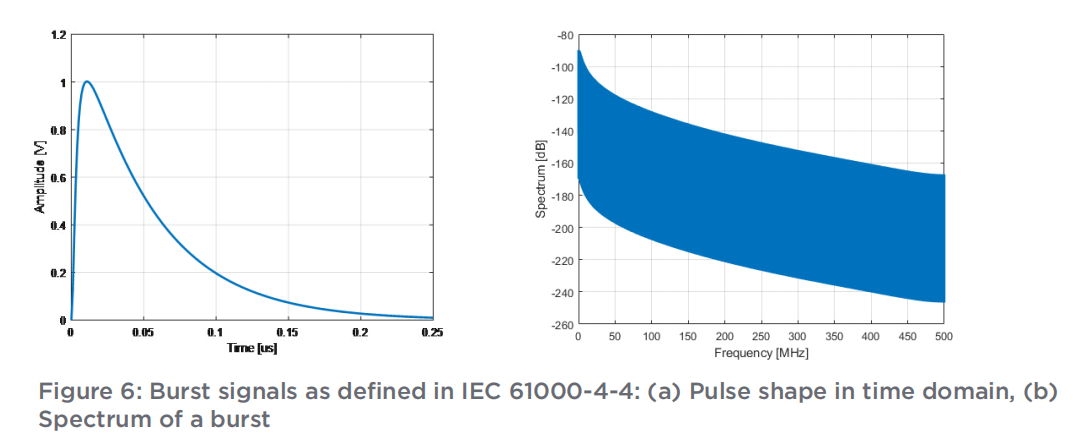
The use of PoDL will allow the data and power harnesses to be combined on the same cable. This setup accomplishes the simultaneous delivery of data and power, but has the disadvantage that it has stringent requirements for the rate of change of noise and power levels, which would otherwise interfere with data transmission. It is therefore particularly important to use good filter circuits in industrial environments to suppress this noise, especially when it is generated in the lower megahertz range
Single-pair Ethernet gives an opportunity to standardize protocols across industrial networks. Why? Considering the sheer number of sensors and actuators in an industrial facility, while Ethernet is the standard for many industrial networks, in the real world of industrial scenarios there is a proliferation of systems and an array of legacy gateways too numerous to count. The role of single-pair Ethernet in bridging the gap between Ethernet and other systems of all kinds is what the industry is more interested in than just its performance benefits.